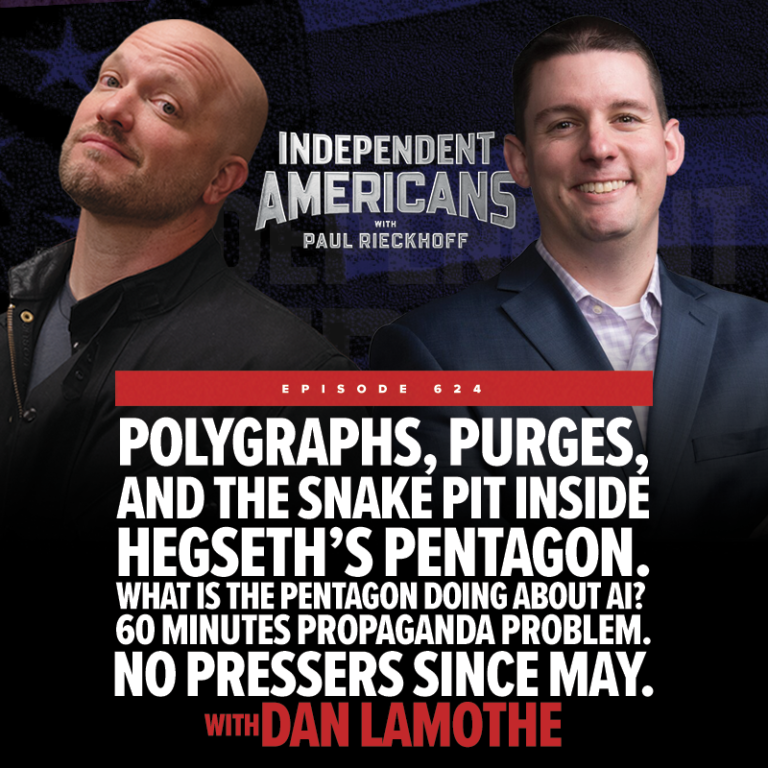
Fifty thousand troops. Zero reporters on a ship. Zero reporters on a base. That’s the reality of the Iran deployment under Trump and acting secretary of culture war Pete Hegseth — and it’s the kind of information vacuum that’s never existed in modern American conflict. Paul is joined by ABC News chief global affairs correspondent Martha Raddatz, one of the most respected and trusted voices in military journalism, for a no-BS briefing on what happens when the Pentagon shuts the press out of a shooting war.
This is a conversation about more than access. It’s about trust — the trust the American public places in a non-political military, the trust troops place in journalists who actually show up, and the trust that gets shredded when a defense secretary turns a West Point graduation into a culture war rally. Paul and Martha walk through the Memorial Day lines that got crossed, why embeds matter, what the rank and file actually think about the politics being shoved down their throats, and why the easiest way to stop the truth is to never let anyone see it in the first place.
In this episode
- Why 50,000 troops in the Iran theater have zero embedded reporters — and what that blackout is hiding
- Martha Raddatz on what it’s actually like to cover the Pentagon under unprecedented press restrictions
- Paul calls Hegseth what he is: the acting secretary of culture war
- The West Point speech that crossed lines that have never been crossed before
- How politicizing the uniform contaminates public trust — and drives Americans away from service
- Why the troops want to tune out Washington, full stop — including the loudest voices on every side
- The Mary Mariner story: women in combat aircraft and what fighter pilots actually said when the cameras were off
- Memorial Day at Arlington vs. the beach — the contrast that builds (or breaks) civil-military trust
- Why an independent, trusted press is not a threat to the military — it’s a feature of a functioning democracy